Audioplayer
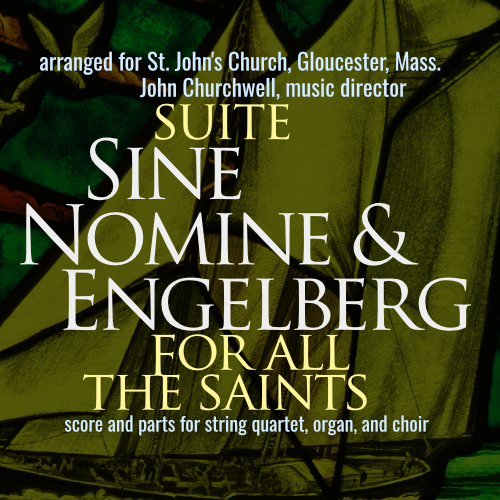
Sine Nomine Engelberg Suite - String Quartet
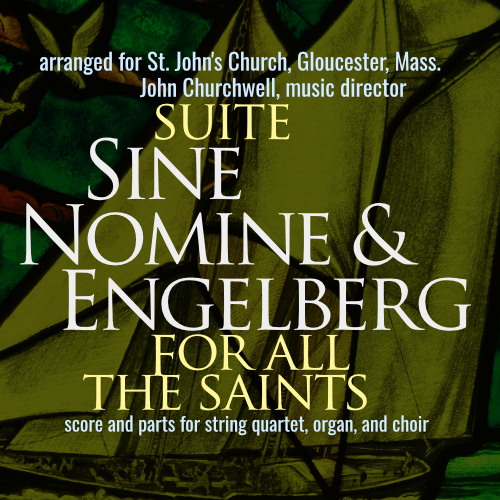
For all the saints
String quartet, organ, choir, and congregation
William Walsham How's text For all the saints was published in 1864, and after 40 years of borrowed tunes, gained two original settings, ENGLEBERG by Charles Villiers Stanford (1904) and SINE NOMINE by Ralph Vaughan William (1906). This setting uses both - using SINE NOMINE on the outer verses, with three interior verses sung to ENGELBERG.
Price:
$35.00
The tune SINE NOMINE is one of four original hymnal settings by Ralph Vaughan Williams, introduced in the 1906 English Hymnal and written specifically for this text; it replaced a tune he confined with other offenders "to an appendix at the end of the book, which we nicknamed the 'Chamber of Horrors.'" Two years prior, Stanford's tune ENGELBERG appeared in an edition of Hymns Ancient and Modern in hybrid form as a hymn-anthem. The version here uses both Vaughan Williams harmonizations, one adapted as an instrumental, and in the middle, three of Stanford's five harmonizations. The final two verses are new harmonizations. This hymn is most often used as a processional hymn in observance of the Solemnity of All Saints. The word saint is of French derivation, a cognate of the Latin sanctus, holy. (The Old English word for holy is hallow, as in 'hallowed be thy name,' and for the night before this feast, All Hallows Eve.) In one measure, a change in the baseline was introduced in the 1933 edition (v.1, under 'rest,' to create a suspension). Sine nomine is Latin for 'without a name,' and though this is a case of Vaughan Williams - who published the tune anonymously - trolling the future, it is nevertheless reminiscent of the lectionary for the Feast of All Saints, "And there are some who have no memorial, who have perished as though they had not lived; they have become as though they had not been born, and so have their children after them." (Ecclesiasticus 44). The Charles Villiers Stanford tune ENGELBERG (When in our music God is glorified) was also written for this text, appearing in two years earlier in the 1904 edition of Hymns Ancient & Modern.
The 'soldier' metaphor
In the Anglican doctrine of the Communion of Saints, Christ's church on earth is consdered to be the Church Militant, the assembly of the faithful in the earthly frame. From Etymology Online, regarding militant,'one who fights':
Originally especially in Church militant (early 15c., chirche militans), which is the Church on earth, seen as engaged in warfare with the devil, the flesh, and worldly powers of temptation and unrighteousness. The Church triumphant (1550s) is the collective body of saints now glorified in heaven.
These comprise a whole, the Communion of Saints, the word communion itself of Augustinian coinage meaning 'together one.' It includes all the faithful, as Walsham How makes explicit in the verse
O blest communion, fellowship divine!
We feebly struggle, they in glory shine;
Yet all are one, and all in thee are thine, Alleluia!
Version SNE 251104-1111
- First publication in this instrumentation
* Ralph Vaughan Williams harmonization
For all the saints, who from their labours rest,
Who Thee by faith before the world confessed,
Thy Name, O Jesus, be forever blessed.
Alleluia, Alleluia!
Thou wast their rock, their fortress and their might; thou, Lord, their Captain in the well-fought fight; thou, in the darkness drear, the one true Light.
Alleluia, Alleluia!
O may thy soldiers, faithful, true, and bold,
fight as the saints who nobly fought of old,
and win, with them, the victor's crown of gold.
Alleluia, Alleluia!
O blest communion, fellowship divine!
We feebly struggle, they in glory shine;
Yet all are one in Thee, for all are Thine.
Alleluia, Alleluia!
And when the strife is fierce, the warfare long,
Steals on the ear the distant triumph song,
And hearts are brave, again, and arms are strong.
Alleluia, Alleluia!
The golden evening brightens in the west;
Soon, soon to faithful warriors cometh rest;
Sweet is the calm of paradise the blessed.
Alleluia, Alleluia!
But lo! there breaks a yet more glorious day;
The saints triumphant rise in bright array;
The King of glory passes on His way.
Alleluia, Alleluia!
From earth’s wide bounds, from ocean’s farthest coast,
Through gates of pearl streams in the countless host,
Singing to Father, Son and Holy Ghost:
Alleluia, Alleluia!
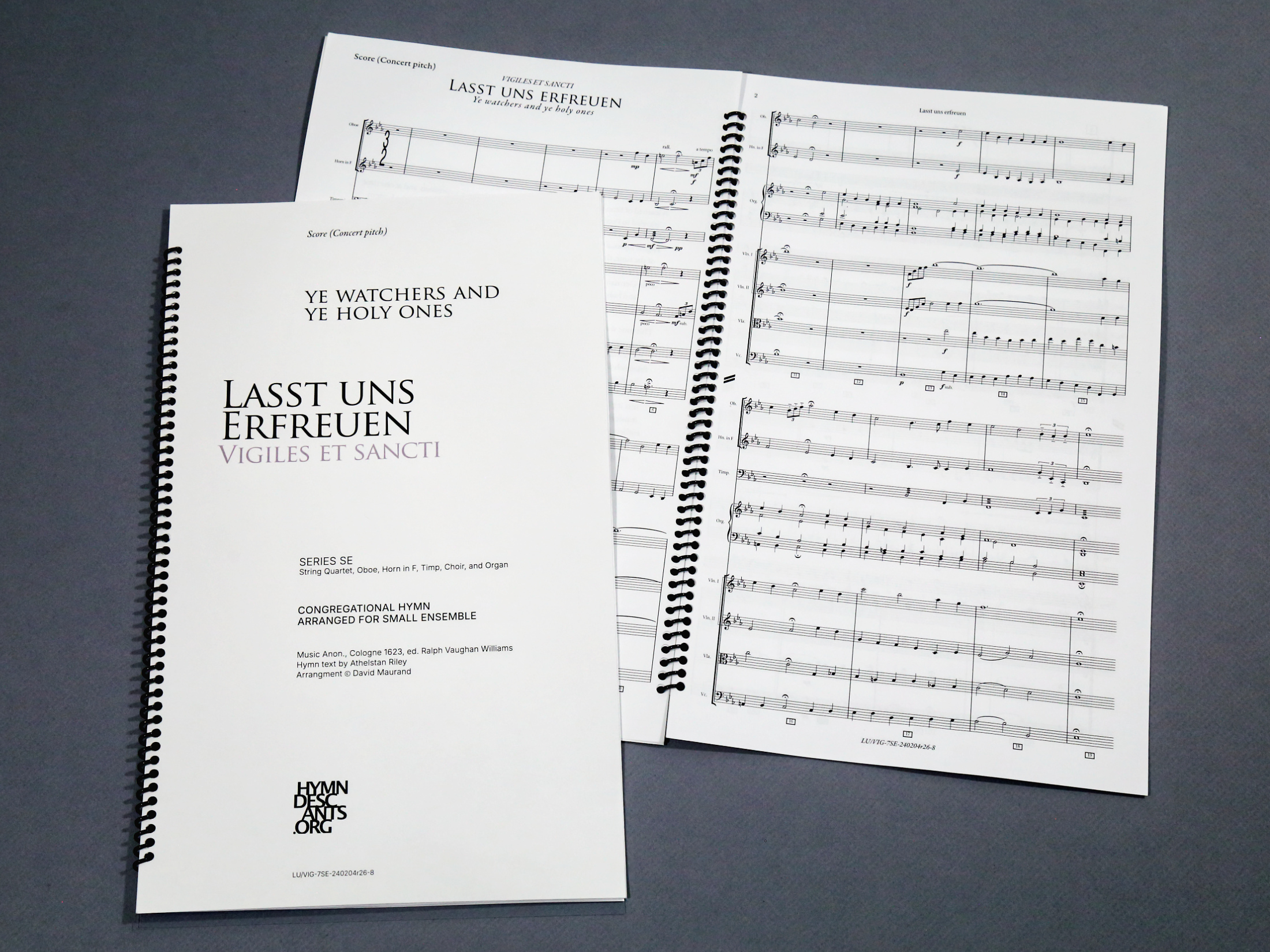
This cost $12 at Staples, $10 at ny local repro shop (2026)
Choir booklet - we have had good luck using booklet mode on a printer that handles 11x17, which will impose (collate for folding) the pages automatically.
Who (or what) is a saint?
The definition of saint, and of the Feast of All Saints, is rather a muddle. The observance emerged in the late 4th C. as a collective feast for the martyrs (on May 13); in the 8th century, Gregory III declared the date of Nov. 1 to commemorate the lives and relics "of the holy apostles and of all saints, martyrs and confessors, of all the just made perfect who are at rest throughout the world." This has a universal ring to it - all the faithful at all times and in all places, a reading largely preserved in the Reformation tradition. But in strict liturgical tradition, the Nov. 1 date became reserved for Mary, the martyrs, apostles, and saints canonized in the Roman tradition; Nov. 2 emerging as the Commemoration of All the Faithful Departed, or All Souls Day. Bishop How, the people's bishop working in London's industrial East End, considered the entire church militant seems to be the saints, all who serve as a soldier with countless others (thousands) to be saints, their status determined by faith and service alone, not the decision of a conclave of luminaries:
For all the saints, who from their labors rest,
who thee by faith before the world confessed,
Thy name, O Jesus, be forever blessed, Alleluia!