CROFT'S 136TH (Original tune 1707)
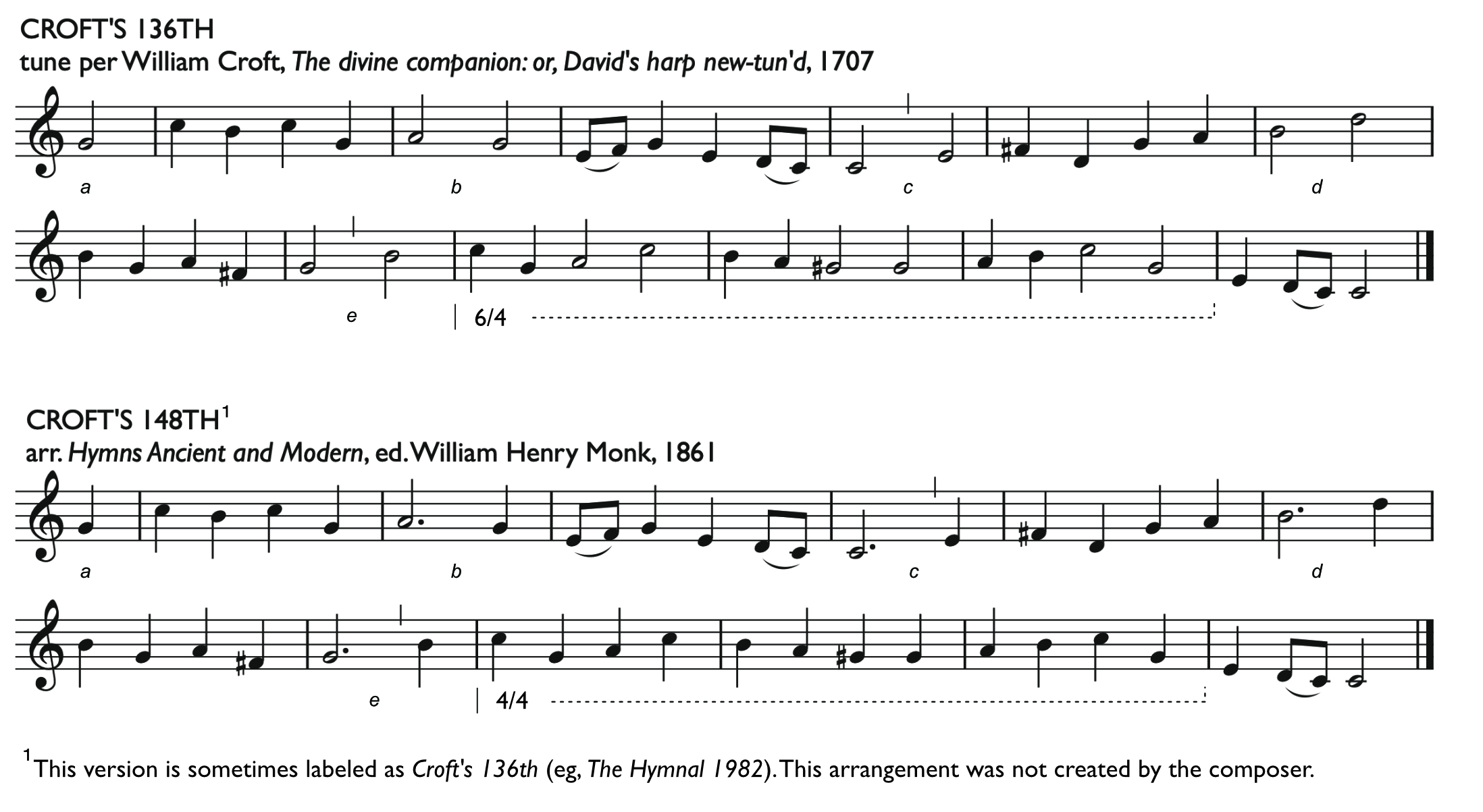
NOTE: There are two versions of this tune; a demo and score are provided for both. Audition: Intro - Organ accompaniment (our harmonization) - descant with harmonization (You can toggle the tabs to see the differences, even while a demo is playing) Free score.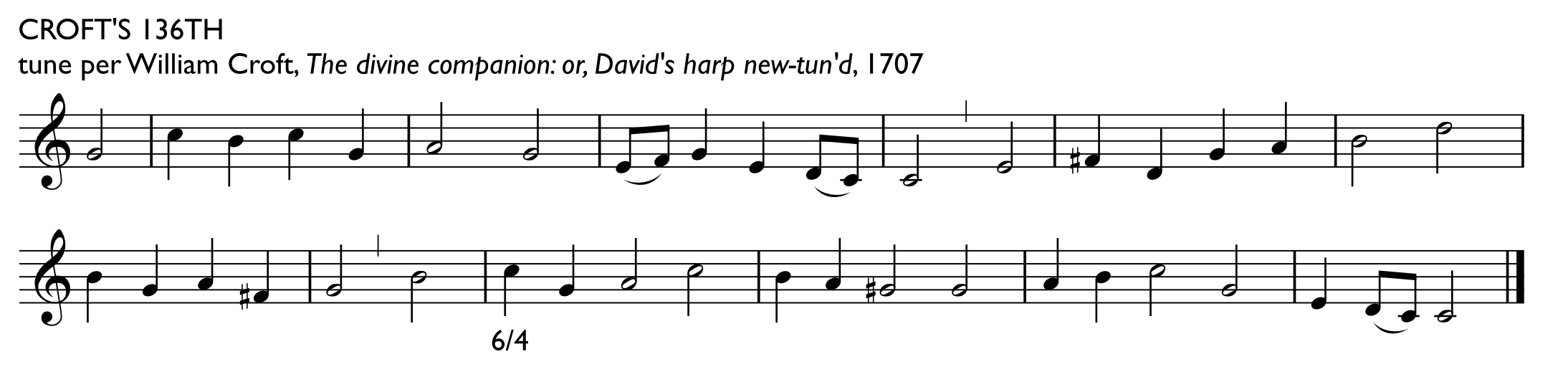
CROFT'S 148TH (tune ed. Monk, 1861)
NOTE: There are two versions of this tune; a demo and score are provided for both. Audition: Intro - Organ accompaniment (our harmonization) - descant with harmonization (You can toggle the tabs to see the differences, even while a demo is playing) Free score.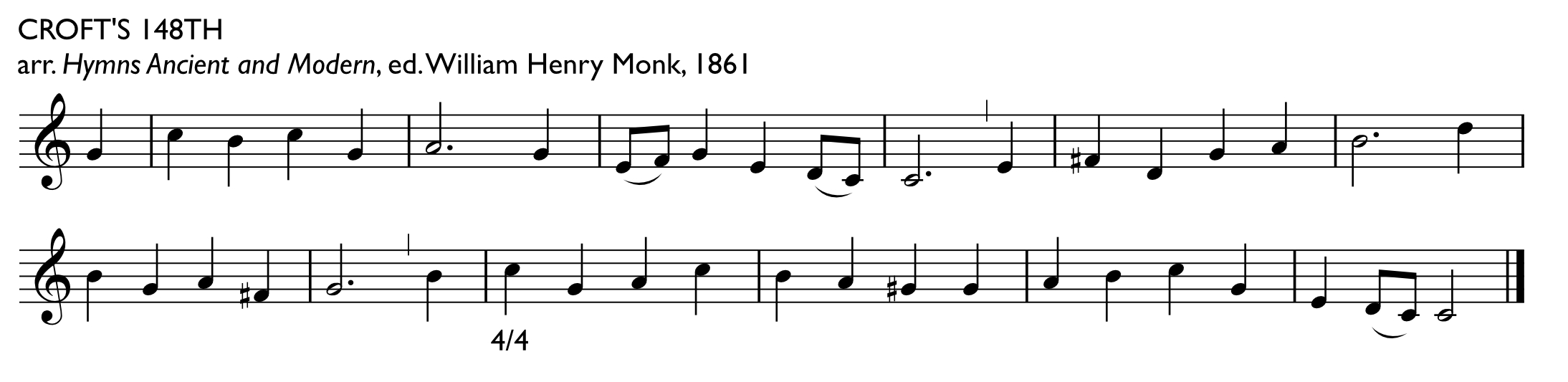
A chorister of the Chapel Royal, William Croft was retained as a "child" singer until the age of 20; and as confirmation of his precocious talent, his first musical works were published a year later, a collection of sonatas and 'ayrs' for flutes, strings, and harpsichord. He labored for a while in the shadow of Jeremiah Clarke and John Blow, until their convenient (for him) passing cleared the path to his ascension as master first of the Chapel Royal and then to Westminster Abbey. Among his copious church works are a setting for solo voice of Psalm 136 that appeared in The Divine Companion, or David's Harp New Tun'd (1707).
But there are two versions of this tune, one of them an arrangement not of Croft's own hand. One hundred fifty years after its initial publication, a version appeared in Hymns Ancient and Modern (1861) labeled by its publisher "CROFT'S 148TH", which followed the melodic contours of the original but with rhythmic differences from Croft's distinctive, jaunty phrasing. The HAAM version is characterized by a stately, formal rhythm in common time, with insistent forward motion; until 1904 HAAM also left off the acciacaturas. Psalm 136, Croft's own pairing, requires the addition of a refrain to fit the composer's 66 66 44 44 meter which happens to precisely fit metrical versions of Psalm 148 and hymns such as Ye holy angels bright and O ye immortal throng. The revised setting in HAAM was set to a hymn for John the Baptist and was given the Croft's 148th nomenclature, though today some hymnals may refer to the variation as "Croft's 136th". And, oh the irony! In the original, Croft set the six-syllable phrases to four-beat bars, and conversely the four-syllable phrases to six-beat bars. The English Hymnal (1906) published it with the composer's original cadences and re-renamed it CROFT'S 136TH.
Comparison - The Divine Companion (1709), Hymns Ancient & Modern 1861 ("148th"), English Hymnal 1906 ("136th")
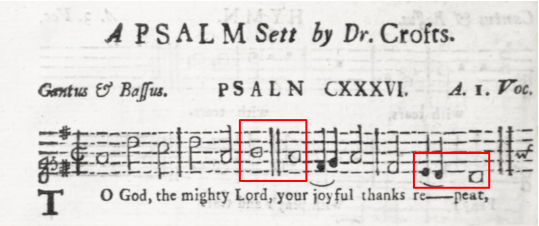
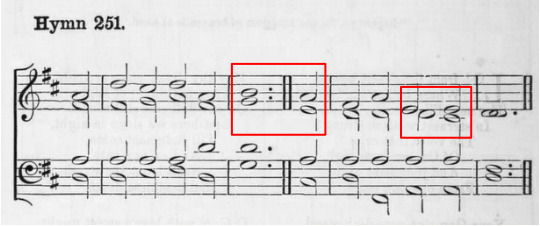
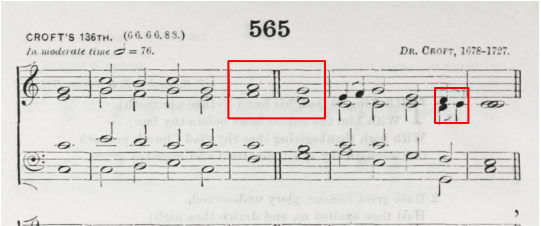
The text is from the 7th C hymn Angularis fundamentum, a relatively literal translation for H&AM by John Chandler. This Latin source is also the basis for John Mason Neale's more creatively liberal translation, Christ is made the sure foundation.
1.
Christ is our cornerstone,
On him alone we build;
With his true saints alone
The courts of Heaven are filled.
Our hopes we place on his great love
For present grace and joys above.
2.
O then with songs of praise
Make earth and Heaven ring;
Our voices we will raise
The Three in One to sing;
In joyful song we will proclaim
Both loud and long that glorious name.
3.
Here, gracious God, do thou
For evermore draw nigh;
Accept each faithful vow,
Mark each suppliant sigh;
On all who pray, in copious shower,
Thy wonder-working blessings pour.
4.
Here may we gain from Heaven
The grace which we implore;
And may that grace, once given,
Be with us evermore,
Until that day when all the blest
Shall find in thee eternal rest.
Further reading
The Divine Companion: or David's HARP New Tun'd, The Fourth Edition, with large Additions, John Playforth, 1722 via Google Books p. 170 (free).
The Music of the Church Hymnary and the Psalter in Metre, Its Sources and Composers, William Cowan and James Love, 1901, via Google Books, p. 40 (free).
*sometimes marked CROFT'S 136TH, e.g. The Hymnal 1982
Each with two pages
1 - Descant with harmonization (vers. 7.1.2)
2 - Four verses organ / SATB
Descant verse
Here may we gain from Heaven
The grace which we implore;
And may that grace, once given,
Be with us evermore,
Until that day when all the blest
Shall find in thee eternal rest.
-Angularis fundamentum, 7th C. tr. John Chandler.